Commercial Roofing
Commercial Metal Roofing
Metal roofs are common on warehouses, manufacturing facilities, agricultural buildings and retail structures. They are durable systems, but they age differently than membrane roofs — most problems show up at fasteners, seams, laps and penetrations rather than in the middle of a panel.
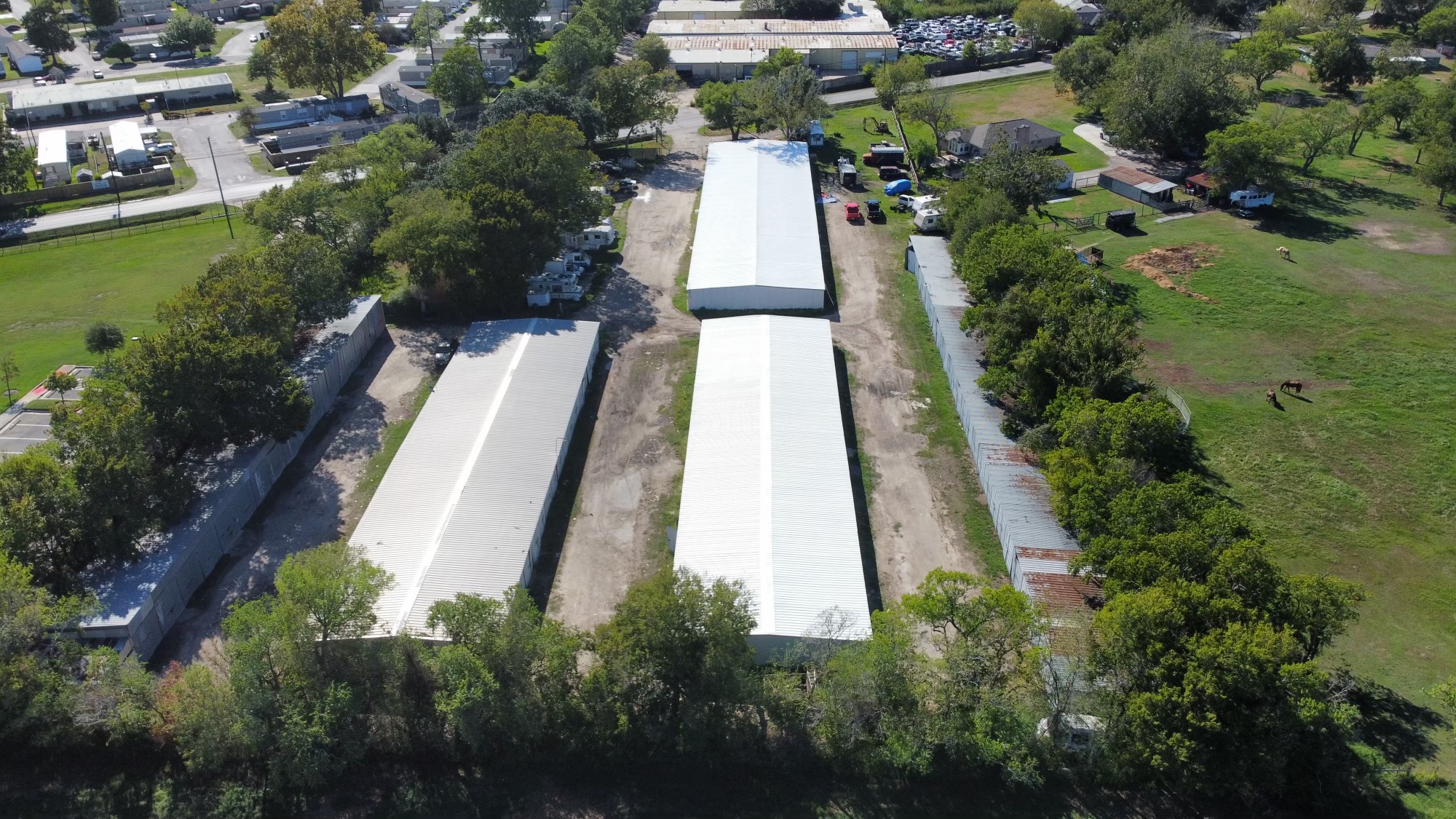
Metal roof repair and maintenance
Backed-out fasteners, deteriorated washers, open laps, rusted panels and failed sealant at penetrations are typical sources of leaks. These issues are usually addressed directly rather than by replacing the entire roof.
Metal roof restoration
A metal roof in sound condition can often be restored with a coating system that seals seams and fasteners and creates a continuous surface over the panels. As with any restoration, this depends entirely on the condition of the existing roof, which we confirm during the inspection.
Manufacturer Credentials
Manufacturer Certifications & Products We Work With
Our certifications and product experience help us evaluate compatible options for each existing roof system.
Certified
- Henry Certified
- UNIFLEX Certified
- APOC Certified
Manufacturers / Products We Work With
- Progressive Materials
- Karnak
- Gaco
Metal Roofs Fail at the Details
How Commercial Metal Roofs Age
Metal panels themselves are durable. What determines whether a metal roof needs repair, restoration or replacement is almost always the condition of the fasteners, seams, penetrations and flashing.
A commercial metal roof does not usually fail the way a membrane roof does. The panels keep shedding water long after the details around them have started to leak — at backed-out fasteners, worn washer seals, open laps, dried sealant and flashing that has worked loose under years of expansion and contraction.
That is good news for most owners, because those are exactly the failures that can be repaired directly. It is also why an inspection matters: the same symptoms can mean a few hours of detail work or a roof that has corroded beyond practical repair. We walk the roof and tell you which one you have. If the roof is structurally sound and the details are the problem, commercial roof restoration is often worth evaluating before any larger project.
Common Problems
What Goes Wrong on Commercial Metal Roofs
The same handful of failure points account for most metal roof leaks we are called to.
Backed-out fasteners
Thermal movement works screws loose over the years. A backed-out fastener is an open hole in the panel — one of the most common and most repairable leak sources on a commercial metal roof.
Failed washer seals
The washer under each fastener is a seal, and it deteriorates with UV, heat cycling and age. Even screws that are still tight can leak through a hardened or cracked washer.
Corrosion and rust
Surface rust, corrosion around fastener holes, and rust at panel edges and laps. Corrosion in its early stages is treatable; corrosion that has gone through the panel changes the conversation.
Open seams and laps
Panel laps and seam sealant fail with movement and age. Water travels along the panel underside before it shows up inside, so the leak inside rarely sits under the failed lap.
Penetrations and curbs
Pipe penetrations, rooftop equipment, curbs and skylights interrupt the panel field. Failed sealant, unsealed fasteners and poor flashing at these points are frequent leak sources.
Flashing and edge metal
Wall transitions, ridges, hips, gutters and edge metal take wind and movement first. Loose or deteriorated flashing lets water behind the panels and into the assembly.
Failed sealant
Sealant at laps, flashings and penetrations is a maintenance item on every metal roof. Dried, cracked or separated sealant needs to be replaced, not simply coated over.
Storm and impact damage
High winds, wind-blown debris, hail and fallen branches can lift panels, damage flashing or compromise fasteners. After a storm, damage is often visible only from the roof surface.
Individually, these are small problems. Left alone, backed-out fasteners become soaked insulation, failed laps become corroded panels, and deferred flashing work becomes structural concern. Addressing details early is the least expensive work a metal roof will ever need — and preventative roof maintenance is how it stays that way.
When repair makes sense
A sound roof with failed details
- Leaks trace to fasteners, washers, laps, flashing or penetrations.
- Panels are intact and securely attached with surface corrosion at most.
- The structure, purlins and deck under the roof are sound.
- Failures are isolated to details rather than spread across the roof.
- Sealant and flashing can be corrected before damage spreads.
Most commercial metal roof repair falls into this category: fasteners replaced, washers resealed, laps and seams re-sealed or reinforced, flashing rebuilt and penetrations properly detailed. Commercial roof repair on a sound metal roof is targeted work — not a teardown.
When repairs stop being enough
When we will tell you the roof is past repair
- Panels are rusted through or deteriorated across large areas.
- The structure or purlin system is compromised.
- Corrosion around fastener holes is too advanced to re-secure panels.
- Failures are widespread rather than isolated to details.
- The panel system has reached the point where repairs no longer hold.
When corrosion and failure have spread through the panel field, repairs become a treadmill — patching one area while the next one opens up. At that point the honest answer is commercial roof replacement, and we will say so rather than keep selling repairs.
Corrosion
Rust: the Question That Decides Everything
On a metal roof, corrosion is the dividing line between a roof that can be saved and a roof that is being replaced.
Surface corrosion and rust staining on panels are common in the Houston climate — heat, humidity and rain all accelerate them — and in the early stages they are treatable. Corroded panels can often be cleaned, treated and included in a restoration once the source of moisture is corrected.
What we are looking for during the inspection is how far the corrosion has gone: rust at the surface, rust that has pitted the panel, corrosion concentrated around fastener holes, or panels that have rusted through entirely. Corrosion around fasteners is especially important, because a panel that can no longer hold its fasteners cannot be reliably re-secured. Where corrosion is caught early, restoration remains an option; where it has compromised the panels or the structure, we will recommend repair or replacement instead of coating over a roof that is failing from the inside.
Restoration Candidacy
When a Metal Roof Is a Candidate for Coating
Metal panel roofs are frequent restoration candidates — the coating seals the seams and fasteners and creates a continuous surface over the panels. Candidacy is decided by the roof's condition, confirmed during the inspection.
What a restoration candidate looks like
- Panels are intact, attached and structurally supported.
- Corrosion is surface-level or localized, not rust-through.
- Fasteners, seams, laps and flashing are repairable.
- The assembly underneath is dry, or moisture sources can be corrected.
- Drainage is acceptable or can be corrected as part of the project.
In a metal roof restoration, fasteners are replaced or treated, seams and laps are repaired and reinforced, penetrations and flashing are detailed, and a coating system is then applied over the prepared roof — the same inspect-first, restore before you replace approach we take on every roof.
When we do not recommend restoring a metal roof
- Panels are rusted through or deteriorated across large areas.
- The structure or purlins supporting the roof are compromised.
- Corrosion around fastener holes prevents panels from being re-secured.
- Trapped moisture is causing ongoing corrosion inside the assembly.
- The panel system has deteriorated beyond practical repair.
We do not recommend coating simply because restoration is our specialty. Coating a metal roof that is corroding through hides the problem for a season and costs the owner twice — so if the inspection says repair or replacement, that is the recommendation you will hear.
What the Inspection Covers
How We Evaluate a Commercial Metal Roof
The inspection is where repair, restoration and replacement are told apart. Nothing is quoted on a roof we have not walked.
Fasteners and washers
We walk the panel field checking for backed-out screws, failed washer seals and corroded fasteners — the highest-frequency failure points on a metal roof.
Seams, laps and panel condition
We examine seam and lap sealant, panel attachment, dents, oil canning and corrosion, and note which conditions are isolated and which are systemic.
Penetrations, curbs and flashing
We inspect every penetration, curb, skylight, wall transition, ridge and edge condition — the details where most metal roof leaks actually begin.
Structure and underside
Where accessible, we look for signs of water entry, trapped moisture and corrosion on the underside or at purlins, because what is behind the panels matters as much as the surface.
Drainage and surroundings
We check gutters, downspouts, low areas and how water leaves the roof, along with conditions — equipment, adjacent structures, overhanging growth — that affect the roof long term.
Restoration candidacy
If the roof is sound, we evaluate whether a restoration coating is appropriate. If it is not, we tell you that and explain what is — repair, or replacement.
Houston Conditions
What the Gulf Coast Does to a Metal Roof
Houston weather does not usually damage a metal roof in one event — it works on the details continuously.
Heat and thermal movement
Long, hot summers mean daily expansion and contraction. That movement is what loosens fasteners, works laps open and fatigues sealant over the years — the root cause behind most metal roof details we repair.
Rain and storm season
Heavy rainfall and hurricane-season wind find every weak detail quickly: an open lap, a loose flashing, a lifted edge. After significant storms, it is worth having the roof checked even if nothing is leaking inside yet.
Humidity and corrosion
Gulf Coast humidity and rain accelerate corrosion, especially where moisture is trapped or drainage is poor. Early-stage rust is manageable; long-standing trapped moisture is what turns treatable corrosion into panel replacement.
Wind uplift at edges
Wind loads are highest at eaves, ridges and corners. Edge metal, flashing and panel fastening in those zones are checked carefully, because that is where storm damage typically starts.
FAQ
Commercial Roofing Questions
Straight answers about coating, restoration and commercial roof systems.
What Is Your Commercial Metal Roof Actually Telling You?
The first step is an inspection of the existing roof. We walk the panels, check the fasteners, seams, corrosion and flashing, and tell you honestly whether repair, restoration or replacement is the right recommendation for your building.
Next Step
Let's Find the Right Solution for Your Roof.
Whether your commercial roof needs repair, restoration, coating, or replacement, we'll evaluate the existing system and help you determine the right path forward.