Our Primary Specialty
Commercial Roof Restoration & Coating
BD Roofing & Contracting is a commercial roof restoration contractor working with warehouses, retail centers, office buildings and industrial properties in Houston and the surrounding communities. Restoration repairs and reinforces the roof you already have and adds a new protective surface over it, which can extend the useful service life of a roof that is still structurally sound — without a full tear-off.
It is not right for every roof, and the only way to know is to inspect the one you have. Restore before you replace — when the roof supports it.
Not sure where to start? Request a free roof inspection or browse our commercial roofing services.
Roof Restoration
Does Your Roof Really Need to Be Replaced?
Aging doesn't always mean replacement. If your existing commercial roof is structurally sound and a good candidate for restoration, a professionally installed coating system may help extend its service life while avoiding the cost and disruption of a complete roof replacement.
We'll inspect your roof and tell you what it actually needs.
What an inspection covers
An aging roof is not automatically a failing roof
Age alone does not tell you whether a commercial roof needs to be replaced. Condition does. Two 18-year-old roofs on the same street can be in completely different shape depending on drainage, rooftop traffic, equipment work and how the details were built.
Before restoration is even discussed, the existing assembly has to be evaluated point by point. On a commercial roof that means walking the field, opening up questionable areas where appropriate and checking for moisture rather than judging the roof from the surface.
Restoration is considered only when what we find supports it. If the assembly is wet or the deck is compromised, no coating system corrects that, and installing one over the top would only hide the problem for a season.
Maintenance → Repair → Restoration → Replacement
Where Restoration Sits Between Repair and Replacement
Four different levels of work get discussed as if they were the same thing. They are not, and knowing the difference makes the recommendation easier to judge.
- 01
Maintenance
Scheduled housekeeping and minor detail work — clearing drains, resealing details, catching small failures before they become leaks.
- 02
Repair
Correcting a specific, localized failure: an open seam, a damaged section of membrane, failed sealant at a pipe boot, a backed-out fastener on a metal panel.
- 03
Restoration
Repairing the existing deficiencies across the roof, reinforcing seams and details, then installing a compatible coating or restoration system over the prepared roof instead of tearing it off.
- 04
Replacement
Removing the existing assembly and installing a new roof system — the right answer once the roof can no longer hold repairs or the insulation and deck are compromised.
A roof coating is the material; restoration is the work around it. A restoration project usually means correcting existing deficiencies first — repairing seams, reinforcing flashings and penetrations, addressing drainage — and then installing a compatible commercial roof coating system over the prepared roof. If only one area is failing, targeted commercial roof repair may be all your building needs.
Candidate roof systems
Which Commercial Roofs May Qualify for Restoration
Roof type alone does not determine candidacy. Condition, moisture in the assembly, drainage, surface preparation and coating compatibility do.
TPO and other single-ply
Aging TPO can be a candidate when the membrane is intact and attached, seams are repairable and the insulation below is dry. Surface preparation and coating compatibility with the specific membrane matter.
EPDM
EPDM roofs are often restored where the sheet is sound but seams, flashings and terminations have aged. Adhesion to EPDM depends on cleaning and, in many cases, a primer suited to the sheet.
Modified bitumen
Mod-bit roofs with granule loss, surface weathering and isolated lap failures can frequently be repaired and coated, provided there is no widespread saturation in the assembly.
Built-up roofing
Gravel and smooth-surface BUR can be candidates after preparation, though gravel removal, embedded moisture and surface irregularities have to be assessed honestly before anyone talks about coating.
Existing coating systems
A roof that was coated years ago can often be recoated — but the existing coating has to be sound, adhered and chemically compatible with what would go over it.
Metal roofing
Metal panel roofs are common restoration candidates. Fasteners, laps, seams and rust are addressed first; panels with significant corrosion or perforation may need replacement instead.
We work across these systems day to day, including commercial TPO roofing and commercial metal roofing, so the recommendation is not limited to one product line.
Local conditions
Commercial Roof Restoration in Houston
Gulf Coast weather shapes how commercial roofs age here, and it shapes how a restoration project has to be planned.
Long stretches of intense heat and UV exposure weather roof surfaces and work on sealants, laps and exposed fasteners. Humidity keeps roofs damp into the morning, which affects when a coating can actually be applied and how surfaces have to be prepared and dried before work begins.
Heavy rainfall and severe storm and hurricane conditions test drainage more than anything else. Undersized or blocked drains and scuppers leave ponding water sitting on low areas of the roof, and standing water is one of the first things that has to be addressed — through drainage correction or detail work — before restoration is a reasonable recommendation.
Houston-area commercial roofs also carry a lot of rooftop equipment. HVAC units, curbs, condensate lines and service traffic from other trades create the details that tend to leak first, and those details are where restoration work is won or lost.
Most of these buildings are occupied while the work happens. Staging, access, sequencing and coordination around tenants and deliveries are part of the plan, not an afterthought — one reason restoration is often less disruptive than a tear-off when the roof is a candidate. You can see the range of properties we work on across our completed roofing projects and the rest of our commercial roofing services.
Being straight with you
When Commercial Roof Restoration May Not Be the Right Choice
Restoration is our specialty, but it is not the answer for every roof. There are conditions where coating an existing assembly would be the wrong recommendation.
When we find these conditions, we say so and explain what we saw. In that case the conversation moves to commercial roof replacement, and once a roof is sound again, preventative roof maintenance is what keeps it out of that position next time.
Restore when possible. Replace when necessary.
Manufacturer Credentials
Manufacturer Certifications & Products We Work With
Our certifications and product experience help us evaluate compatible options for each existing roof system.
Certified
- Henry Certified
- UNIFLEX Certified
- APOC Certified
Manufacturers / Products We Work With
- Mule-Hide
- Progressive Materials
- Karnak
- Gaco
Roof Coating Explained
Roof Restoration, Explained Plainly
Coating is not a fix for every roof. Understanding what it does — and what it doesn't do — makes it easier to decide what your building actually needs.
What it is
A seamless layer applied over the existing roof
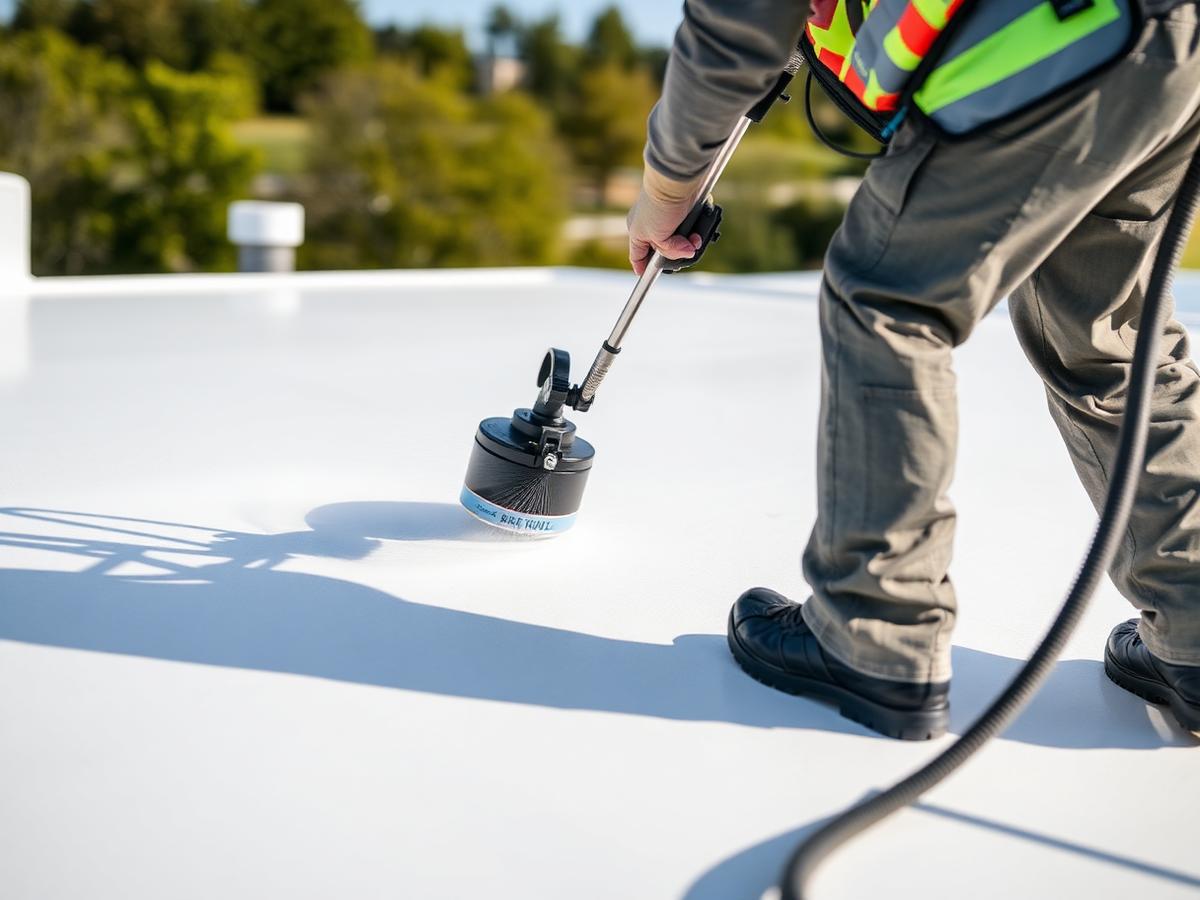
A roof coating system is a fluid-applied material rolled or sprayed over a prepared commercial roof. Once cured it forms a continuous surface with no field seams, covering the existing membrane or metal panels rather than replacing them.
When it makes sense
When the roof below is still sound
Restoration is appropriate when the existing assembly is dry, structurally sound and repairable — an aging surface, isolated failures and localized leaks are usually workable. Saturated insulation, deck damage or widespread system failure are not.
Potential benefits
Extended service life with less disruption
A coating system can add protection to an aging roof, seal repaired details, and reduce the operational disruption of a tear-off. Reflective coatings also reduce rooftop surface temperature. Actual performance depends on the system used and the condition of the roof.
Candidate roofs
Which commercial roofs may qualify
Single-ply membranes such as TPO and EPDM, modified bitumen, built-up roofs, existing coating systems and metal panel roofs can all be candidates. Candidacy is determined by condition, not roof type alone.
Why an inspection comes first
Two roofs of the same age and system can be in completely different condition. Before recommending a coating system, we need to see the surface, the details, the drainage and any moisture in the assembly. Recommending restoration on a roof that is already failing underneath does not help the building owner — and it does not last.
That is why we inspect first and give you the honest result, whether it points toward coating, repair or replacement.
The BD Roofing Process
Four Steps, Starting With the Roof Itself
The recommended solution may be restoration, repair, coating, TPO, metal roofing or replacement — it depends entirely on the condition of your roof.
- 01
Request an Inspection
Call or submit the inspection request form with basic information about your property and roof. There is no cost for the inspection.
- 02
Roof Inspection
We evaluate the existing roof system — surface condition, seams, flashings, penetrations, drainage and problem areas — to understand what is actually happening.
- 03
Recommended Solution
We explain what we found and recommend a path forward: repair, restoration, coating, TPO, metal roofing or replacement, based on the roof's actual condition.
- 04
Professional Installation
Once the scope is agreed on, the work is installed by our crews and coordinated around how your building operates.
FAQ
Commercial Roofing Questions
Straight answers about coating, restoration and commercial roof systems.
Next Step
Let's Find the Right Solution for Your Roof.
Whether your commercial roof needs repair, restoration, coating, or replacement, we'll evaluate the existing system and help you determine the right path forward.